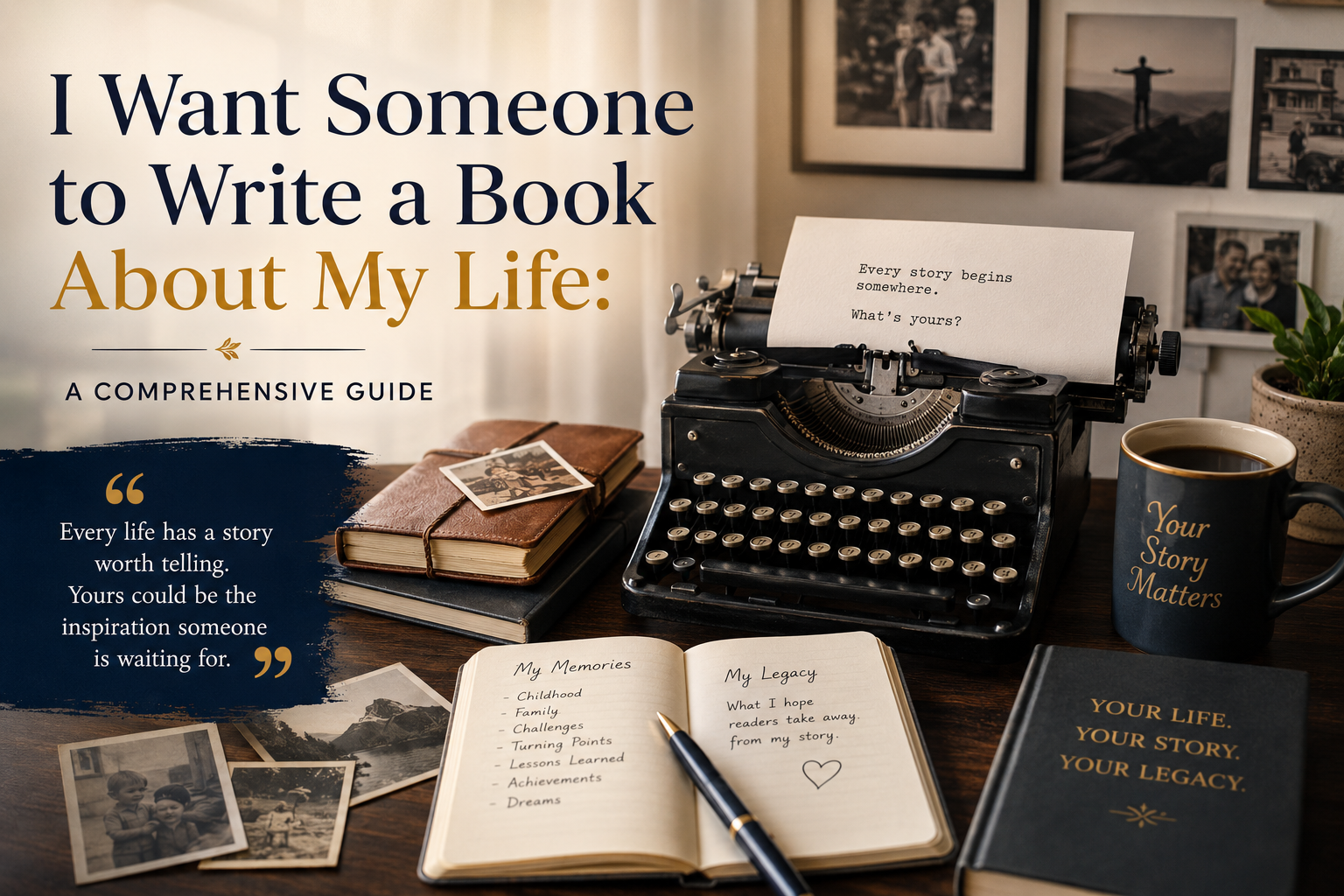
Have you ever thought, “I want someone to write a book about my life” but had no idea where to begin? You may have experienced extraordinary events, overcome difficult challenges, built a successful business, traveled through life-changing circumstances, or simply believe your personal journey could help, inspire, entertain, or connect with other people. Turning a lifetime of memories into a complete book can be challenging, especially when you do not have the time, writing experience, or confidence to organize your story yourself. The good news is that you do not have to write every word alone. A professional ghostwriter can work with you to transform your memories, experiences, interviews, documents, photographs, and personal ideas into a professionally structured manuscript while preserving the perspective and message that make your story uniquely yours.
Can Someone Write a Book About My Life?
Yes a professional writer can help you turn your life story into a book. This kind of project is often called a memoir, autobiography, personal biography or narrative nonfiction book depending on what you want to achieve. What role you want to have in your life story. A ghostwriter can interview you ask about events arrange your memories in order or by theme do extra research when needed and turn your experiences into interesting chapters. You remain the source of the life story while the professional writer supplies the writing and storytelling skills needed to turn your experiences into a manuscript. The final book can cover your life or focus on a particular period, relationship, career, challenge, achievement, change or defining experience, in your life story.
Why Do People Want Someone to Write Their Life Story?
People have different reasons for wanting to turn their lives into books. Some want to preserve their family history for generations while others want to share lessons learned from difficult experiences. Entrepreneurs may want to document the journey behind their company or professional success while public figures and experts may use a book to establish authority in their field. Some people simply have a story they believe deserves to be told. Your reason does not have to be extraordinary in the sense. A meaningful life story can come from experiences when those experiences contain emotional depth, valuable lessons, compelling relationships, personal growth or a perspective readers can recognize in their own lives. The key is identifying what makes your story meaningful to you and potentially valuable, to your audience.
What Type of Book About My Life Should I Write?
Before starting it’s important to figure out what kind of book you really want to write. A memoir usually focuses on experiences, ideas, relationships or times in your life instead of trying to write about everything that happened from the beginning until now. An autobiography usually gives a look, at the writers life and is often told from the writers own point of view. A biography is usually written about someone Life by another person and can include a lot of research and talking to people. Narrative nonfiction can mix life events with storytelling methods to make the reading more engaging. Some writers might also want to take events and turn them into a story that is not true but based on real life. Picking the style early on can help decide the way the book is organized the way it sounds how much research is needed and how to write it.
How Do I Start Writing a Book About My Life?
The first step is not always, about writing Chapter One. Begin by thinking about why the book should exist in the place. Ask yourself what you hope readers will understand, feel, learn or remember once they finish the book. Then start gathering your memories and any source material you have. Old photographs, journals, letters, emails, personal documents, newspaper articles, awards, business records, family stories and important dates can help you bring back events and spot moments. You can also create a timeline of your life and note the experiences that changed you. Don’t worry about getting the memories at the start. Just capture the details the people involved the places, the feelings, the conflicts, the choices the failures, the successes and the moments that made a difference. When you have material you can decide which parts belong in the book and which ones might not fit the main story.
Do I Need to Remember Everything?
No. You do not need a perfect memory to write a compelling life story. In fact, trying to include every event can make a book unfocused. A strong memoir or life story usually selects experiences that support a larger theme or narrative. Your childhood, career, relationships, failures, successes, challenges, and turning points may all contain useful material, but they do not necessarily all need equal attention. A professional writer can help identify which experiences have the strongest narrative potential and determine how they can connect to the overall purpose of the book. When specific facts are uncertain, additional documents, interviews, photographs, correspondence, public records, or conversations with people who were present may help clarify details. It is also important to distinguish between remembered experiences, documented facts, and reconstructed scenes so that the manuscript remains responsible and credible.
How Do I Organize My Life Story Into Chapters?
Organizing all of your life can feel really hard at first because there are many memories to think about. A good way to start is by finding the changes that happened in your life. Of just writing down what happened each year think about how each experience helped shape who you are today. A book could start with a moment from now and then go back to show how you got there. Another way is to go in order from the beginning like when you were a child and then move through times in your life. If your book is about things, like family or growing stronger a theme-based way of organizing might work best. The best way to arrange your story depends on what you want to tell and who you want to read it. The main idea is to make a story that feels meaningful of just being a bunch of memories put together.
Should I Write My Life Story Myself?
Write your story can give a strong sense of ownership because write your own story chooses the words and shares the experiences. Write your story may be very helpful if you like writing if you have enough time and if you feel safe turning memories into a clear outline. Yet write your story can also be hard emotionally and technically. Write your story may know the events too well and not see which details will interest someone outside. Write your story may find it hard to talk about painful moments and tricky relationships in a neutral way. Write your story may also face problems, with structure, pacing, dialogue, transitions, character details and keeping a reader hooked for the whole book. These problems do not mean write your own story cannot be done. They are important things to think about before beginning the work.
When Should I Hire a Ghostwriter for My Life Story?
Hiring a ghostwriter might be a good idea if you have the story in your mind but don’t have the time or the writing skills to turn it into a complete book. This can be very useful if you have a job kids to take care of a company to run or a lot of information that you don’t know how to put together. A ghostwriter can talk to you. Use those talks, as material for the book. This makes it easier for you to share your story the way you want of spending a lot of time looking at a blank page. Professional writing help can also be important if your story has complicated time lines, many characters, hard moments or a lot of things to research. The ghostwriter does not take over your role as the person telling the story. Instead they bring the structure and the writing skills needed to share your story well.
How Does Life Story Ghostwriting Work?
A professional life-story ghostwriting project generally begins with a consultation. During this stage, you explain why you want to write the book, who you want to reach, what experiences you want to include, and what you hope readers will take away from the story. The writer may then conduct one or more interviews to learn about your background and gather detailed information about important events. These conversations can cover childhood, family, education, career, relationships, challenges, achievements, failures, turning points, beliefs, and personal transformation. The writer may also review documents and other source materials you provide. After gathering enough information, the writer develops a book concept and outline, establishes the narrative direction, and begins developing the manuscript. You then review sections of the work and provide feedback so the writer can refine the tone, details, voice, and overall direction.
Will the Ghostwriter Make the Book Sound Like Me?
A professional ghostwriter must try hard to understand the authors voice and the authors perspective of only making generic prose. The authors vocabulary, personality, experiences, beliefs, communication style and way of telling stories all shape the manuscript. Interviews are very useful because they let the ghostwriter hear how the author naturally describes people and events. Existing writing, speeches, emails, articles, social media posts or other material also give insight into the authors communication style. The goal is not to copy every word of the authors speech. Instead the ghostwriter aims to produce writing that feels authentic to the author and remains engaging and accessible, to readers.
How Long Does It Take to Write a Book About Your Life?
The timeline depends on the length and complexity of the story, the amount of research required, how frequently interviews are conducted, the author’s availability, the writing process, and the number of revisions. A shorter personal story may be completed faster than a comprehensive autobiography covering several decades. If you are writing independently, the process can take several months or even years depending on your schedule and writing speed. A useful way to estimate the first-draft timeline is to divide your target word count by your average daily or weekly writing output. For example, a 60,000-word manuscript written at 500 words per day would require approximately 120 writing days for the first draft alone. Interviews, research, outlining, revisions, editing, proofreading, and publishing preparation would add additional time.
How Many Words Should a Life Story Be?
Memoir and autobiography do not have a fixed word count. The right length depends on the scope of the story what the genre expects, the audience, publishing goals and the amount of material that truly adds to the narrative. Many adult nonfiction and memoir projects run between fifty thousand and ninety thousand words, but shorter or longer books can also fit the purpose. A focused memoir that covers one period may need far fewer words, than a comprehensive autobiography that covers many decades. Than forcing the book to hit a particular number just for the sake of size it is better to tell the story fully and effectively. Each chapter should add to the readers understanding of the journey.
What Should I Include in a Book About My Life?
The answer depends on your purpose and story. You may include important childhood experiences, family relationships, education, career development, major achievements, failures, personal challenges, relationships, important decisions, turning points, lessons, and moments of transformation. However, the book should not become a simple list of everything that happened. Readers usually connect with stories through conflict, emotion, uncertainty, change, and meaningful outcomes. Consider not only what happened but also why it mattered. Explain the decisions you made, what you believed at the time, what you misunderstood, what changed, what you lost, what you gained, and what you learned. These elements can turn a sequence of events into a meaningful narrative.
Should I Include Difficult or Private Experiences?
This is a personal decision. You should decide what you feel comfortable sharing publicly. I know that publishing a book can let many more people see your private experiences. If your story involves family members, former partners, colleagues, friends, businesses or other people you can identify you should also think about privacy, facts and possible legal problems. A professional writer can help with storytelling. Legal or factual questions that are sensitive may need a qualified lawyer. You should never feel forced to add an private experience just because it makes the story more dramatic. Your boundaries. The book should show the story you truly want to share.
Can My Life Story Be Turned Into a Fiction Book?
Yes. Many people like to transform experiences into fiction. I think this approach can be very rewarding. That gives them creative freedom because they can change or mix characters, locations, timelines and events. A fictionalized tale can keep the truth or core themes of an experience even if it does not list every fact. Still it is very important to see the line between fiction and nonfiction and to show the book honestly to readers. If you want to transform your experiences into a novel working with a writer who knows your chosen fiction genre can help turn life material into a story, with rich characters, clear conflict, good pacing and a satisfying ending.
What Does a Professional Book Writing Service Do?
A professional book writing service can assist with different stages of the book-development process depending on the service you choose. Some authors need help developing an idea and creating an outline, while others already have extensive notes and need someone to transform those materials into a manuscript. Professional assistance may include interviews, research, outlining, ghostwriting, editing, proofreading, and manuscript preparation. The exact scope should always be established before the project begins. If you are considering hiring a service, ask about the writer’s experience with your genre, the development process, communication methods, revision policy, expected timeline, confidentiality arrangements, and what is included in the final deliverables.
How Much Does It Cost to Have Someone Write My Life Story?
The cost varies according to the manuscript’s length, complexity, research requirements, number of interviews, writer experience, timeline, and services included. A short memoir based primarily on interviews can have very different requirements from a detailed autobiography requiring extensive research and documentation. When comparing ghostwriting services, do not evaluate proposals solely by price. Consider the writer’s ability to understand your story, their experience with long-form manuscripts, communication process, revision policy, confidentiality practices, and what you will actually receive at the end of the project. A clear written agreement should establish expectations regarding scope, deadlines, revisions, ownership, confidentiality, and payment.
What Should I Give a Ghostwriter?
You do not need to have an organized manuscript before reaching out, to a ghostwriter. For projects helpful materials can include personal notes, photographs, diaries, letters, documents, earlier writing, recordings, interviews, timelines, family details, business records, newspaper articles or just a simple set of memories. The important thing is your openness to share the experiences that shaped your story. A good writer will ask questions to bring out details you might not think matter. The information the writer gets the easier it is to build a rich and true manuscript.
How Do I Choose the Right Ghostwriter?
Choosing a ghostwriter is an important decision. The ghostwriter will work closely with your stories and may need to handle sensitive information. Find a ghostwriter who knows the genre you want and who has written books, not just short posts. Ask the ghostwriter how they will do interviews do research make outlines, write and edit. Good communication is just as important because a project succeeds when the ghostwriter and you work together and trust each other. You should feel free to share your stories and give feedback. Before you start make sure you and the ghostwriter agree on confidentiality, who owns the work how much you will pay, when the work will be finished how many edits are allowed and how the final book will look. The right ghostwriter will listen carefully ask questions respect your view and have the writing talent to turn your stories into an engaging book.
Do I Need a Complete Story Before Hiring a Ghostwriter?
No. In fact, many people contact professional writers precisely because they do not know how to turn their memories into a complete story. You may only have a general idea such as, “I want to write about what happened to me,” or you may have hundreds of pages of notes without a clear structure. A professional writer can help identify the central theme, determine which experiences should receive attention, organize the material, and create a roadmap for the manuscript. You do not need to know every chapter before beginning. You need enough information to explain what you want the book to accomplish and a willingness to collaborate during development.
Is Writing a Book About My Life Worth It?
Writing a life story is about more than becoming a published author. A book can keep memories that might otherwise fade give a lasting record for family members share lessons learned from experience or offer readers a view they might not see elsewhere. For entrepreneurs and professionals a crafted personal story can also share expertise and personal values in a way that normal marketing cannot.. Writing a life story should not be written just because publishing a book sounds impressive. The strongest projects start with a purpose and a true reason, for telling the story.
Your Life Story Is the Starting Point, Not the Finished Book
If you have been thinking, “I want someone to write a book about my life,” you already have the most important ingredient: a story worth exploring. You do not need to know exactly how many chapters you need, how to structure the narrative, or how to write thousands of polished words before you begin. Start by identifying why you want to tell your story, who you want to reach, and what you want readers to take away from it. Gather your memories and supporting materials, identify the moments that changed your life, and consider whether you have the time and skills to develop everything yourself. If you do, self-writing can be deeply rewarding. If you have the story but not the time, writing experience, or structure, a professional ghostwriter can help transform your experiences into a complete manuscript while working closely with you throughout the process. Your memories may exist only in your mind today, but with the right planning and writing support, they can become a book that preserves your journey and allows your story to reach readers far beyond your immediate circle.
Frequently Asked Questions
Can I hire someone to write my autobiography?
Yes. A professional ghostwriter can work with you to develop an autobiography from interviews, memories, documents, research, and other source material. The writer can help organize your life experiences into a structured manuscript while collaborating with you throughout the process.
What is the difference between a memoir and an autobiography?
An autobiography generally covers a broader account of a person’s life, while a memoir typically focuses on particular experiences, themes, relationships, or periods of life. The best format depends on what you want your book to accomplish.
Can someone write my life story if I am not a good writer?
Yes. It is not necessary to be a writer when working with a ghostwriter. The role of the client is mainly to share experiences, ideas, memories and direction while the ghostwriter handles manuscript development and writing.
How long should a book about my life be?
There is no fixed length. Many full-length memoirs and autobiographies are approximately 50,000 to 90,000 words, but the ideal length depends on the scope of your story, genre, audience, and publishing goals.
How long does it take to write a life story?
A life-story manuscript can take months or longer depending on its length, research needs, interviews, writing process and revisions. A comprehensive autobiography generally requires time, than a focused memoir.
Can a ghostwriter interview me and write the book from our conversations?
Yes. Interviews are a common way to gather material for a ghostwritten life story. The writer can ask questions about important experiences and use your responses, along with other source material, to develop the manuscript.
Will the book still be my story if a ghostwriter writes it?
Yes. The ghostwriter brings writing and storytelling skills, to the table. The ghostwriter also receives experiences, ideas, perspective and direction from the author. Working together helps ensure that the finished manuscript reflects the story the author wants to tell.
Can I publish my life story on Amazon?
Yes. Once your manuscript has been professionally prepared, you can explore publishing options such as Amazon Kindle Direct Publishing and other publishing platforms. Your manuscript may require editing, proofreading, formatting, cover design, and appropriate publishing metadata before publication.
What if I only have a life story idea and no notes?
That is enough to start a conversation. A professional writer can ask questions and help you identify important events, themes, characters, and turning points. Interviews can then provide the material needed to develop the manuscript.
Should I hire a ghostwriter to write my life story?
If you have a story you want to tell but lack the time, writing experience, or ability to structure a long manuscript, hiring a ghostwriter may be a practical option. If you enjoy writing and have the time to develop the manuscript yourself, self-writing may be more appropriate.